In Conversation With: Bokja
Stitching Memory, Craft, and Resistance in Beirut

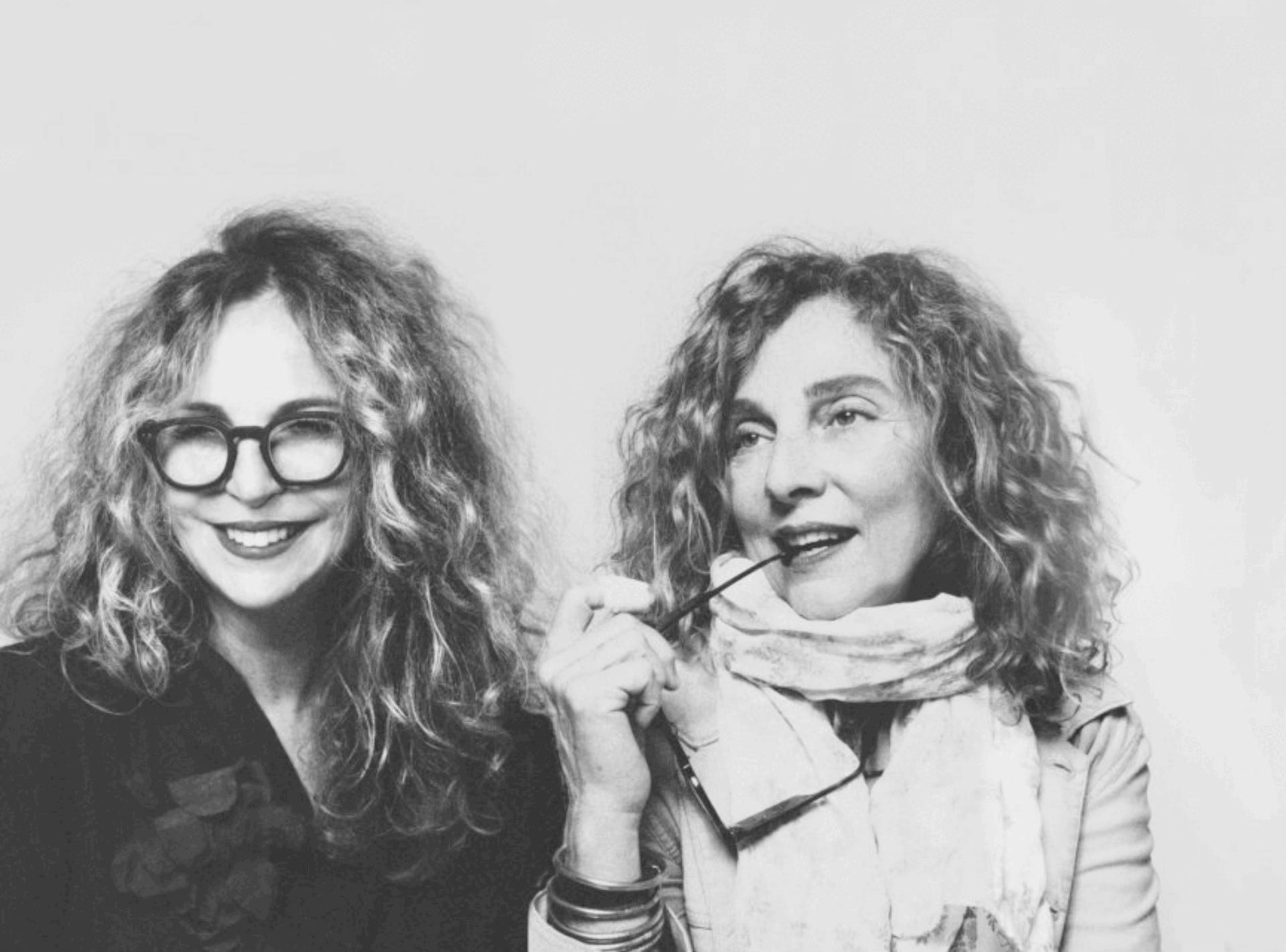
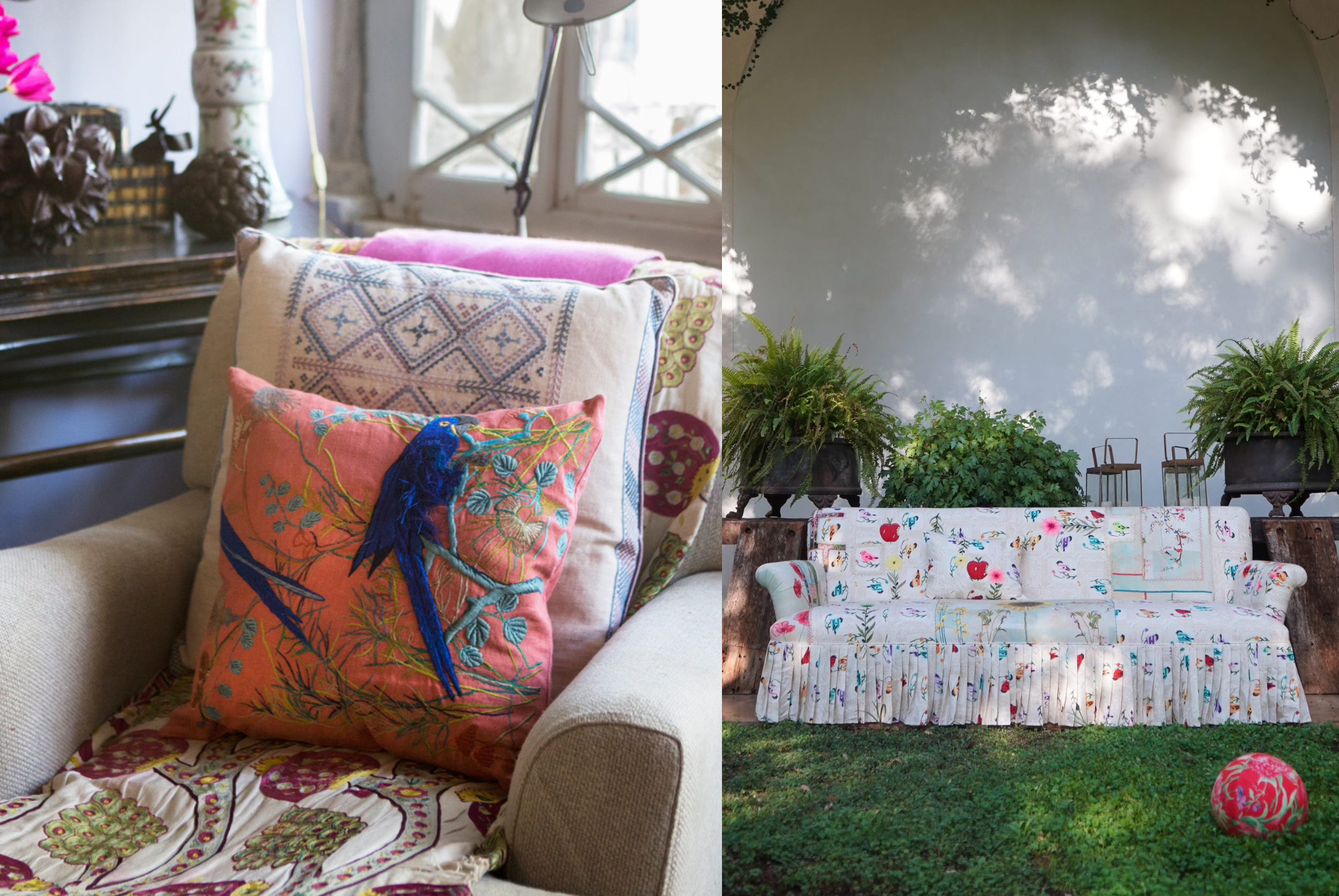
Founded in Beirut by Huda Baroudi and Maria Hibri, Bokja has spent nearly three decades redefining Lebanese design through vibrant textiles, repurposed fabrics, and bold storytelling. Their work blurs the line between craft and contemporary design, transforming fragments of history into living archives. Applied across homeware, from cushions, sofas, and armchairs to decorative art, wall hangings, and even clothing, Bokja’s creations carry stories into daily life. Rooted in Beirut’s contradictions of beauty and chaos, humour and tragedy, their pieces are more than objects; they are acts of memory, resilience, and imagination. Here, the founders shared with me what inspires them, how sustainability is woven into their DNA, and what it means to create and thrive in Lebanon today.
Bokja’s work beautifully blends storytelling, craftsmanship, and design. How do you choose the narratives or themes that anchor each collection?
We draw inspiration first and foremost from our lives here in Beirut, from the chaos, beauty, and contradictions that shape our daily existence. But our gaze extends far beyond; we remain deeply rooted and in tune with what’s happening around the world. We seek out what’s meaningful, what stirs us, and reinterpret it through our lens, telling stories in our own way.
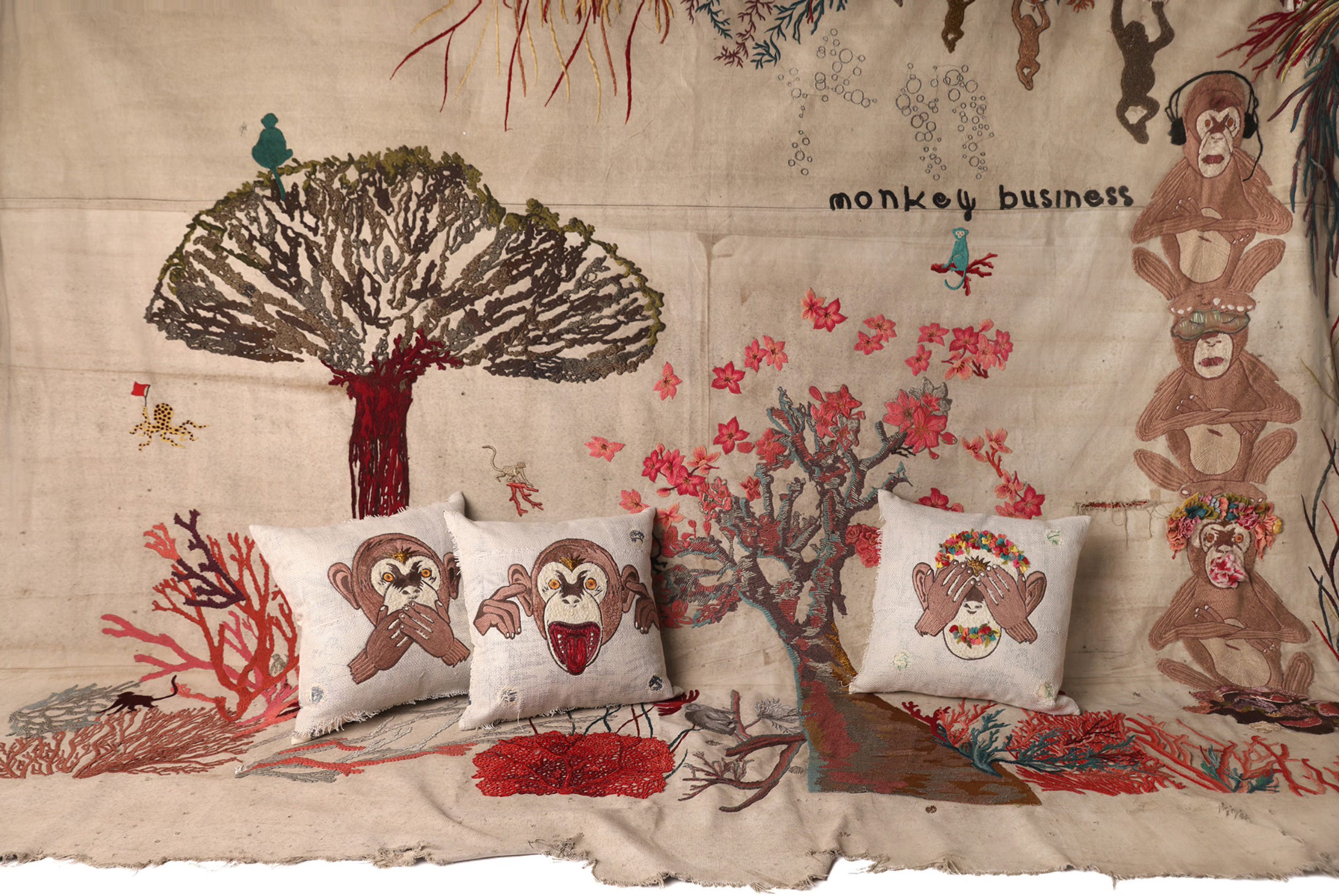
Monkey Business was born from this space, a reflection on our collective indifference and our tendency to turn a blind eye to environmental collapse. August 4, the day of the Beirut explosion, left an indelible mark on us. We responded with a triptych, a major tapestry piece, as a gesture of remembrance, resilience, and reckoning. We want our work to touch people, which is why we respond to the real world around us.
Much of your work repurposes vintage fabrics and embroidery from the region. What does sustainability mean to Bokja in both a cultural and environmental sense?
Sustainability and Bokja have always gone hand in hand, long before the word became a trend. Bokja was born nearly 30 years ago from a deep reverence for the old, the discarded, and the forgotten. Maria and Huda travelled extensively along the Silk Road, collecting fabrics and references that now make up the core of Bokja’s archive. What others saw as remnants, we saw as raw material that had already stood the test of time due to how they were built. We try to replicate that. In essence, sustainability is not a strategy for us; it is in our DNA.
How has Lebanon, with its rich yet turbulent history, shaped the way you approach beauty, memory, and material in your work?
Beirut forces you to stay awake. It challenges you to stay flexible, resourceful, and emotionally raw. You cannot create here without being affected by what is happening around you: the collapse, the hope, the absurdity, the humour, the resilience. It all seeps into the work.
What keeps us rooted here is precisely that tension. Beirut is not easy, but it is endlessly rich. The stories, the people, and the layers of culture and contradiction make it fertile ground for a studio like Bokja. Our practice was born here, and it continues to be shaped by this city’s spirit: stitched together, never quite whole, but always fiercely alive.
Bokja pieces often feel like living archives. How do you balance honouring traditional craftsmanship with pushing the boundaries of contemporary design?
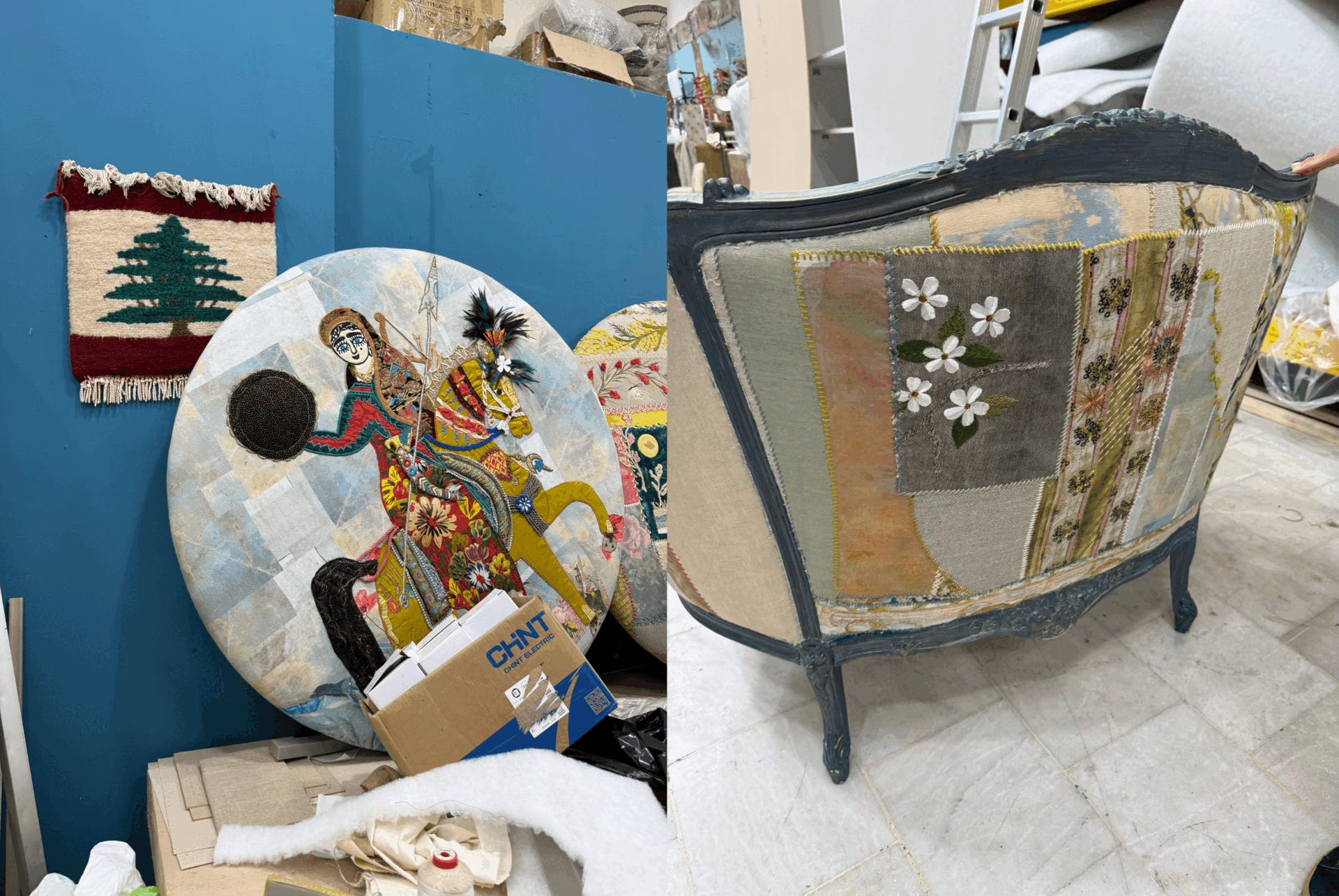
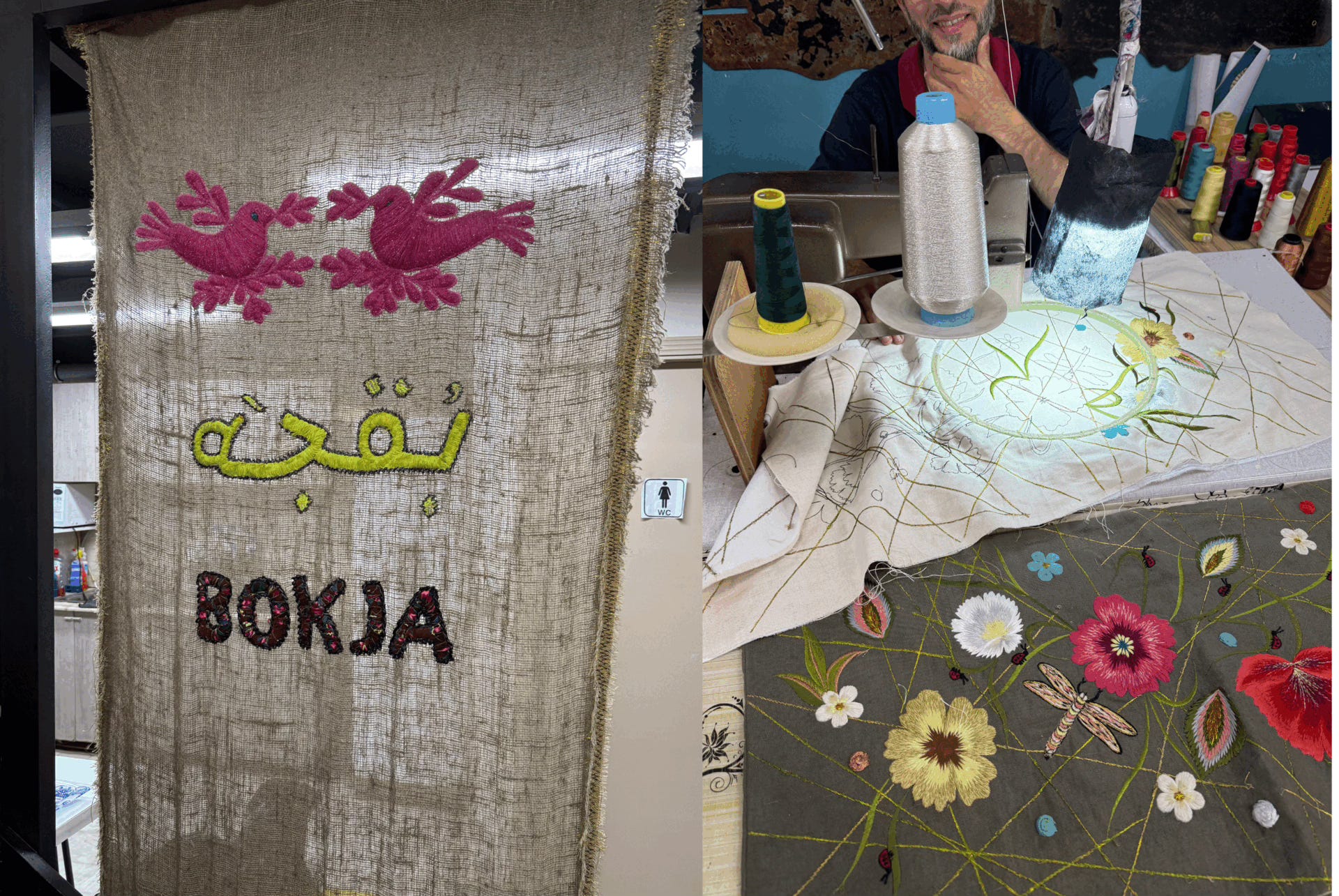
We honour traditional craftsmanship by using our archive as our anchor. We are not only inspired by motifs and decorative elements, but we also mirror the techniques used to construct these collectibles.
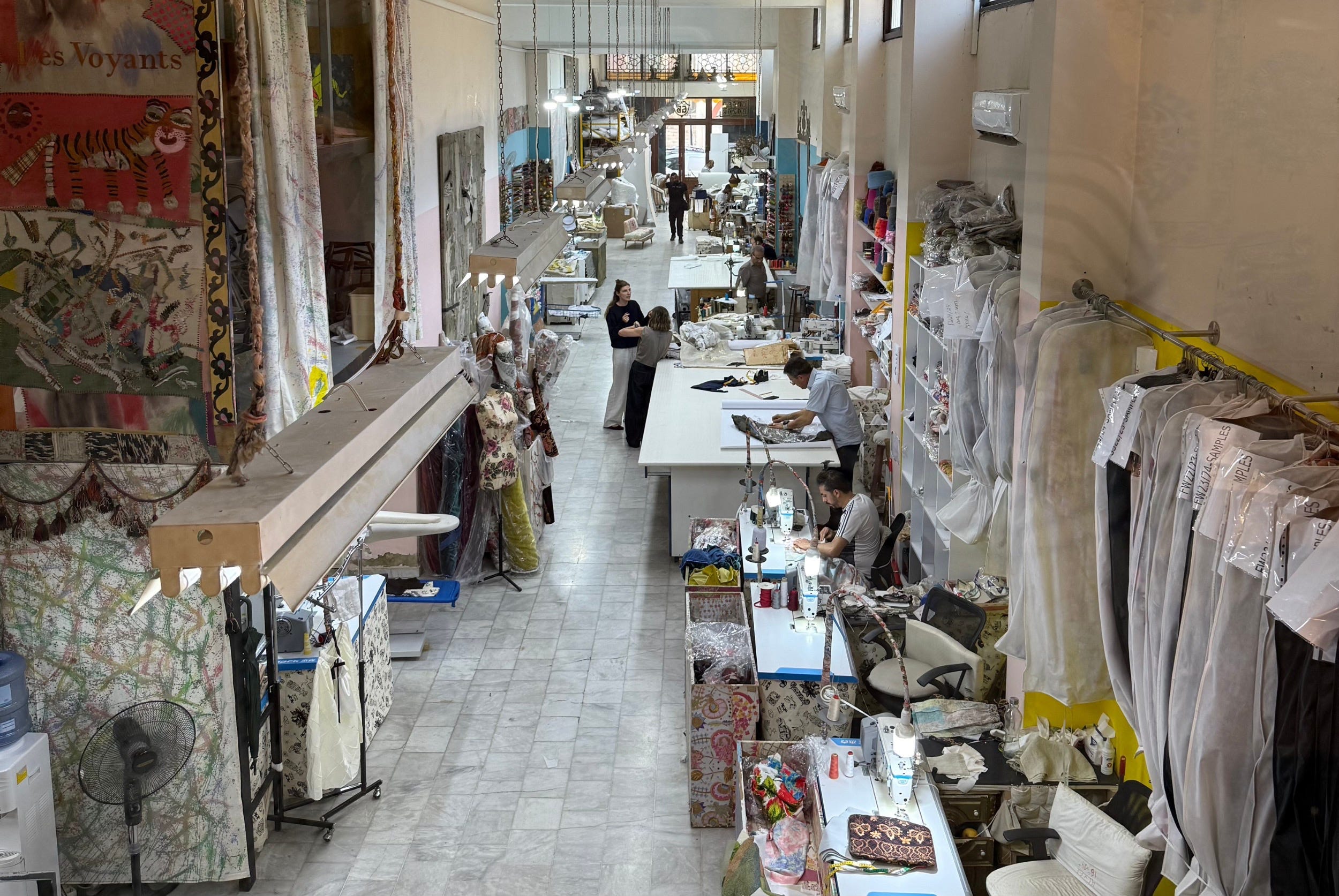
In Beirut, there is a wealth of craftsmen from across the region, each bringing their own particular technique or practice. These skills are passed down through generations and are incredibly special. This means that at Bokja we can produce high-quality pieces that mirror the quality of items made before mass production.
Whilst we do adapt to new technologies, we remain firm in our belief that luxury equates to handmade goods, high quality, and the human touch. This is the true meaning of timelessness.
What role does humour or irony play in your aesthetic language, especially when referencing serious social or political issues?
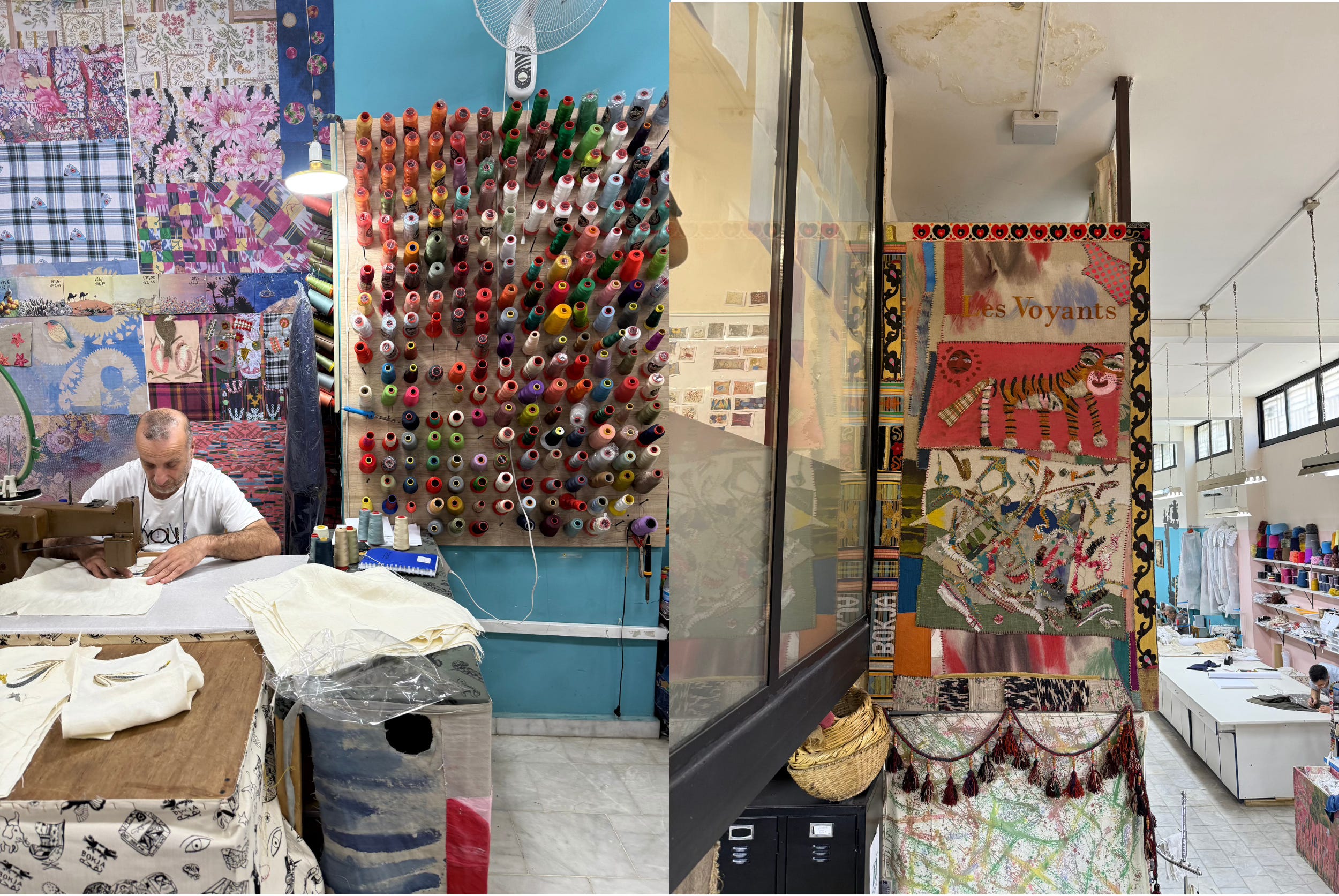
We always try to keep humorous elements in our work. We live in a world where its ills can easily dominate you. Whilst our work reflects this, it is also an outlet for us to be creative and to have fun. We enjoy the time we spend with the people we work with; we talk, and naturally we laugh. This is reflected in our work.
We also believe that humour can initiate a positive response in those experiencing our work. It takes you out of the real world for a brief moment and transports you somewhere else.
Can you share a story behind a particular piece that was especially meaningful, either for you or for the person who commissioned it?
At Bokja we have been fortunate to work with many incredible people, organisations, and NGOs across the world.
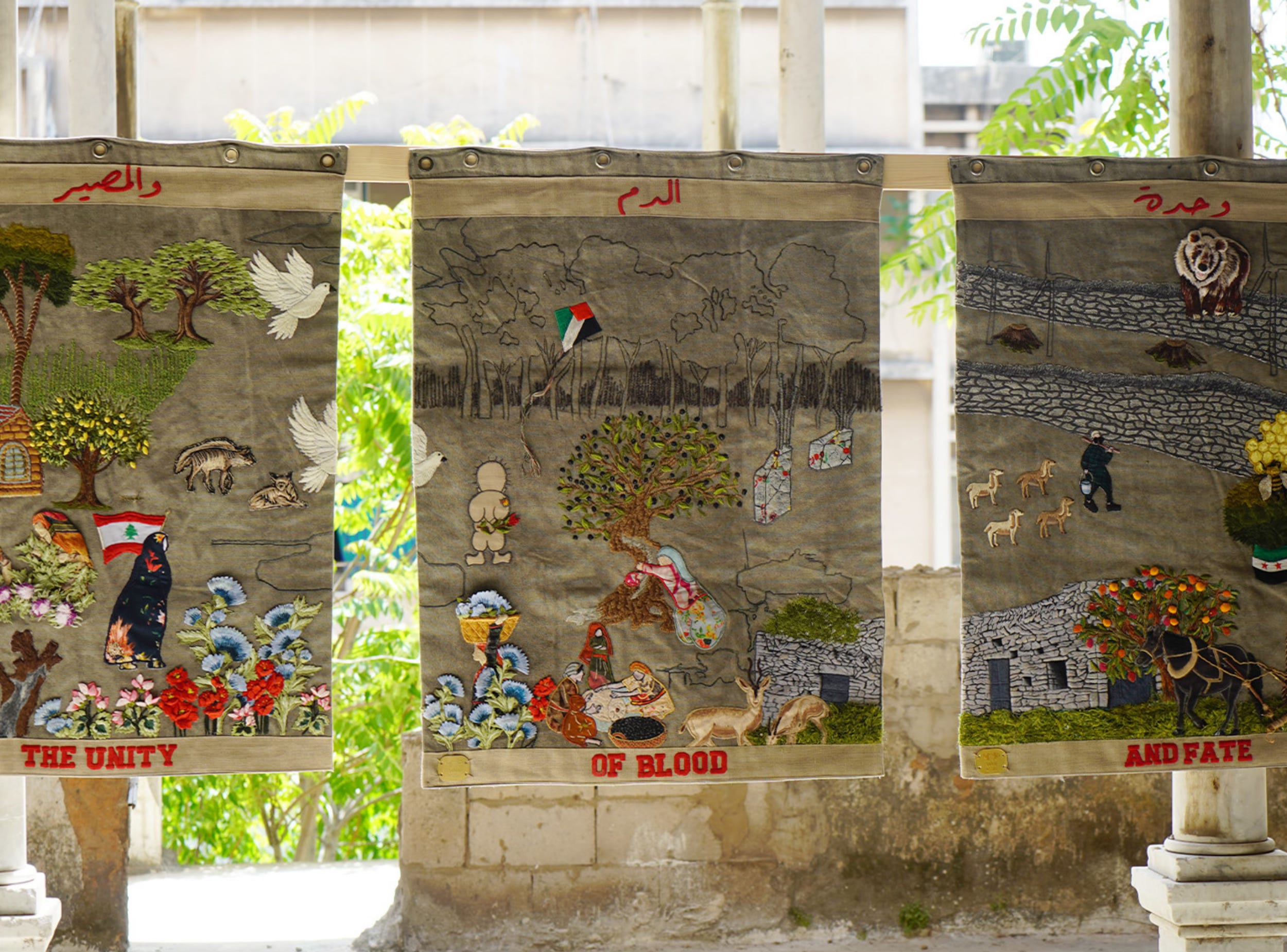
We recently exhibited a triptych tapestry at The New Museum in New York with Eco Rove. Land Keepers: Unity of Blood and Fate is a project that is particularly close to our hearts because it highlights the realities of life in Lebanon, Syria, and Palestine today. Each panel of the triptych features elements that symbolise each country, while grey thread outlines the instruments of oppression inflicted on the people and the land.
We live in a region controlled and assaulted by foreign powers seeking greater influence. As a result, not only are lives lost, but the land is burned. The environmental repercussions of Israel’s nearly two-year-long assaults on our lands are yet to be fully measured. However, this is not the first time such events have occurred. If you look at the news from this summer, you will see environmental catastrophes in Mexico and Texas where innocent lives have been taken.
In our work, we try to remember that these disasters are the result of the same systems that continue to oppress us in Lebanon, Syria, and Palestine, and that we are united in that reality.
How do you collaborate with local artisans, and how important is preserving regional craft knowledge in your design process?
We collaborate with many local craftsmen and women, but we are careful to find the right voices for specific projects. The Maraya Art Centre in Sharjah recently commissioned us to create a tapestry titled Hands off my Zaatar, which celebrates Palestinian food and addresses Israeli food appropriation. This is something we, as Lebanese, are deeply familiar with and that pains us each time we witness it.
For this project, we worked alongside Inaash, an organisation that collaborates with Palestinian women from refugee camps across Lebanon to create tatreez embroidery. This form of embroidery is inherent to Palestinian identity and something we strongly believe in preserving. Including their touch elevated the meaning of the tapestry to an entirely new level.
Has the current Lebanese crisis changed the way you work, logistically, creatively, or emotionally?
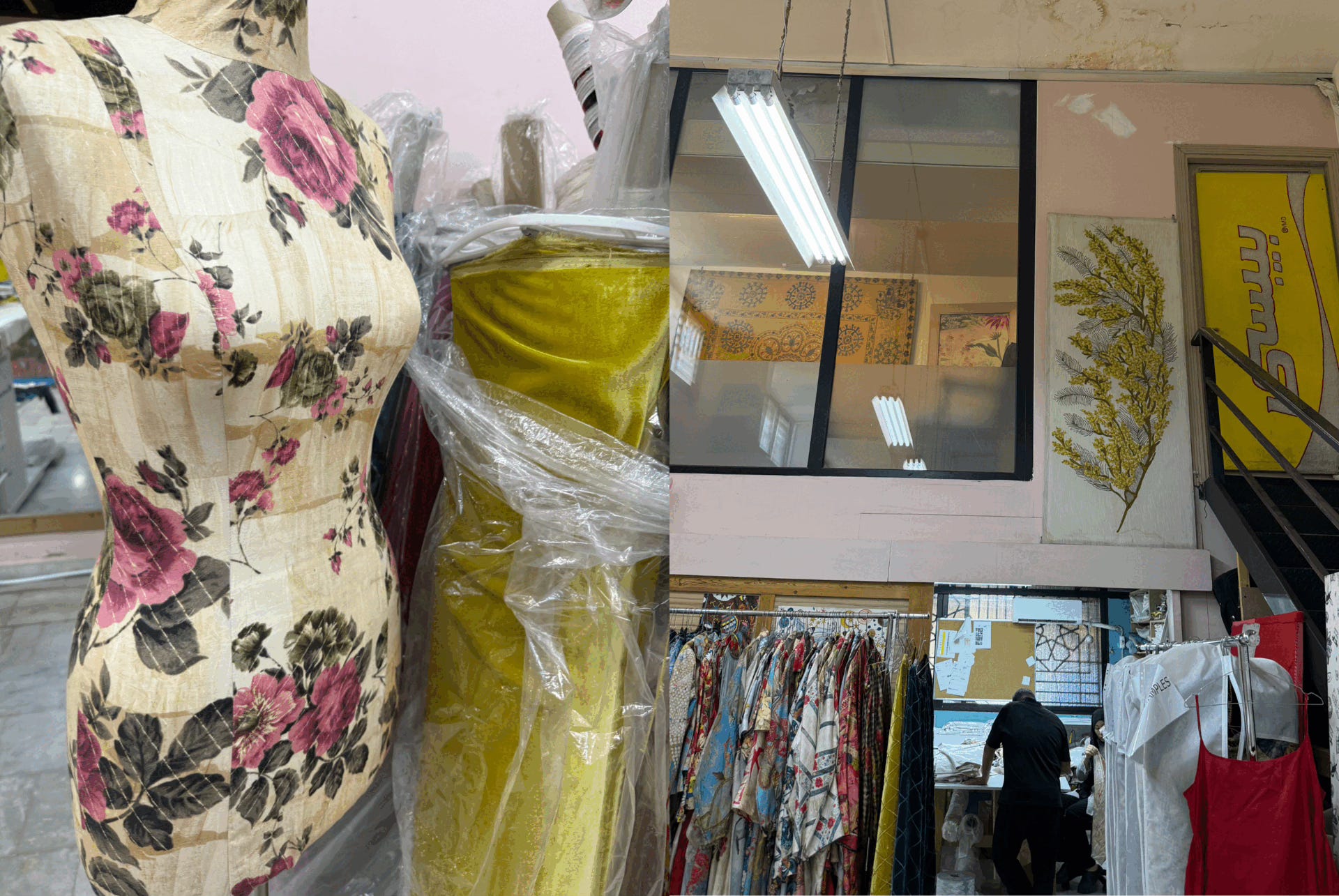
To create and thrive as a design studio in Beirut today is both an act of defiance and deep love. It means living with uncertainty as a constant companion, learning to make beauty with limited resources, creating rhythm within chaos, and finding meaning in fragmentation.
What does it mean to create and thrive as a design studio in Beirut today, and what keeps you rooted there despite the challenges?
It means embracing the city for all its positives and negatives. We integrate honesty into our work, expressing how we feel, both the mundane and the beautiful. At the same time, we try to exist as any studio elsewhere would. We do not want to be defined solely by the challenges we face, even though they undoubtedly shape us.
Lebanon is an incredibly beautiful country. Our families and friends live here, and it is not easy to simply get up and leave. This is where we draw our inspiration from, where our creative minds can run free. Without Beirut, Bokja would be incomplete.
Looking ahead, how do you envision Bokja evolving over the next decade, in Lebanon and globally?
Over the coming decade, Bokja will continue to evolve as a living, breathing archive of stories, people, places, and the fragile beauty of handmade things. While our core remains grounded in craftsmanship, heritage, and sustainability, we see ourselves expanding the ways in which we tell stories.
We imagine deeper collaborations with artisans across borders, blurring the lines between art, design, and activism. We envision immersive installations and textiles that speak to the climate crisis, migration, and identity, with each piece becoming not just a product, but a voice.
Technology will enter the picture, not to replace the hand, but to amplify it, perhaps through digital archiving of disappearing techniques or interactive works that allow audiences to participate in the narrative.
Bokja will grow into a global platform not only for design, but for dialogue. Always rooted in Beirut, but always reaching outward. Our commitment to repurposing, reinterpreting, and remembering will only deepen with time.